

Fan Theories & Speculation
Where the good speculation lives once the main guide pages have done their job.
ℹ️ Fan Content
Timeline Placement Theories
The question of where Laufey sits in the God of War timeline was one of the first debates after the State of Play reveal. Three major theories emerged, and the official picture has shifted significantly since June 2.
Denied by OfficialPrequel Theory
The game takes place entirely before GoW 2018, showing Faye's life as the Guardian of the Jötnar in Jotunheim.
Evidence against:Cory Barlog explicitly denied this in the IGN exclusive interview: “None of this is telling a side story. This is very much a new chapter in a single grand work.” Wikipedia confirms the narrative begins after Faye's funeral at the start of GoW 2018, not before it.
ConfirmedParallel Timeline Theory
Laufey's story runs concurrently with GoW 2018 and Ragnarök. Faye awakens in the Everywhen at the same time Kratos and Atreus begin their journey in the Norse realms.
Evidence supporting:Barlog confirmed “everything we're doing in this game runs parallel to 2018 and Ragnarök, and ties directly to everything.” Wikipedia corroborates: the narrative starts after Faye's funeral (GoW 2018 opening). Faye can hear Kratos' voice and see his apparitions — only possible if both stories run simultaneously.
Partially ConfirmedMyth-Space / Everywhen Theory
The Everywhen is less “multiverse" in a comic-book sense and more a mythic overlap where time and story stop behaving cleanly — a space where all mythological traditions coexist.
Evidence supporting:Officially described as “the afterlife of the gods of all mythologies.” Barlog stated the Everywhen's magic density is amplified a thousandfold. Egyptian (Sekhmet), Mongolian (Begtse), Norse, and possibly more pantheons overlap inside it. Open questions:Whether Japanese mythology appears (a Screen Rant editorial mentioned a “Japanese Kappa,” but this is unverified).
The Second Protagonist Theory
One of the first big community reads was that Laufey might mirror Ragnarök and hold a second perspective. If that idea is true, these are the names players keep landing on:
- Kratos— The most obvious candidate, given his history as the series protagonist. SMS has confirmed “many more stories to tell with Kratos,” though those may be future games rather than this one.
- Atreus / Loki— Could explore his journey parallel to Faye's, especially given the established dual-perspective precedent from Ragnarök.
- TýrLeak — Unverified ★★— A Game Rant article published June 3 claimed a leak identifying Týr as the second playable character. This has not been confirmed by Sony or SMS and the article's full text has not been independently verified. Týr's established role as a god who travels between mythologies makes him a narratively plausible candidate for the Everywhen setting, but the claim remains purely speculative.
- New Character — Someone meant to pull us deeper into the Everywhen instead of back into old family history.
Status: A second playable character has been reported by multiple outlets (GamingBible, Game Rant) but never officially confirmed. Santa Monica Studio has publicly committed to a dual-track strategy — more Kratos games alongside the Laufey expansion — which may or may not mean dual protagonists within a single game.
Metatron's Cube & Phranque
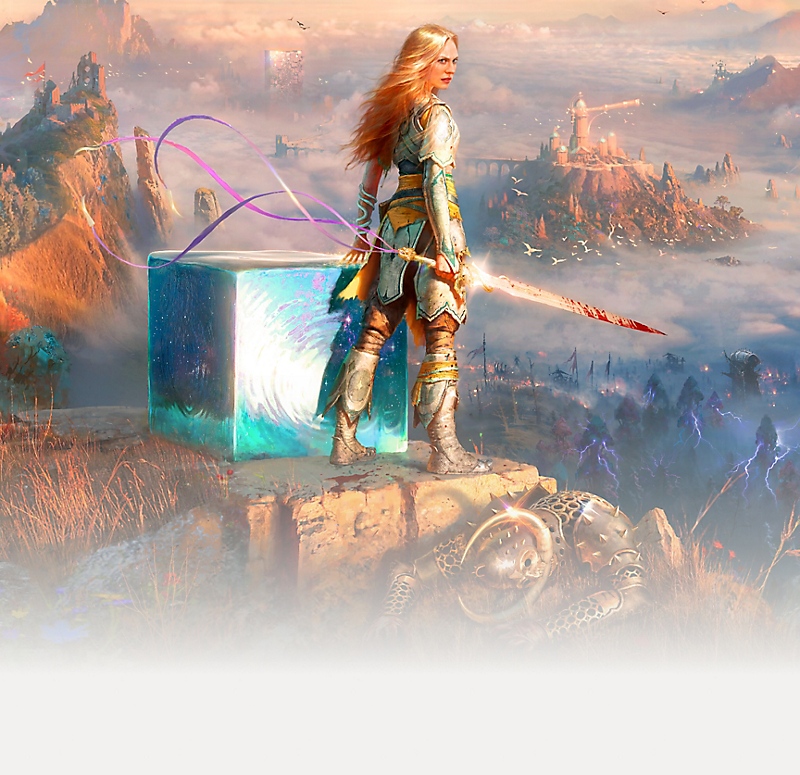
A theory circulating on Reddit's r/GodofWar community draws a connection between Phranque's cube form and Metatron's Cube, a sacred geometry figure from Jewish mysticism (Kabbalah). Metatron's Cube contains all five Platonic solids and is associated with the archangel Metatron — a being who bridges the divine and mortal realms.
Evidence supporting:Phranque's cube shape is visually suggestive. The Everywhen is explicitly a space where all mythological traditions overlap — Jewish mysticism could plausibly be part of that. Phranque is described by director Ariel Lawrence as helping “Faye see the world for what it truly is,” consistent with a figure associated with revelation and hidden knowledge.
Evidence against:No official source has named or referenced Metatron. Phranque is officially described as a gelatinous cube companion, and Lawrence has said his arc is about “finding his humanity" — suggesting a grounded emotional journey rather than a cosmological reveal. The cube shape may simply be a D&D-style gelatinous cube reference.
Faye's Cross-Time Perception
The IGN exclusive interview revealed that Faye can hear Kratos' voice and see his apparitions from within the Everywhen. This opens up a cluster of theories about the nature and limits of this ability:
- One-Way Perception— Faye can sense Kratos but Kratos cannot sense her. The Everywhen's thousandfold magic density may create an asymmetric link.
- Reciprocal Connection — Kratos may have subtle moments of sensing Faye during Ragnarök that players previously attributed to grief or memory. This would retroactively add meaning to specific scenes.
- Faye as the Watcher — Her Giant sight (established in GoW 2018 and Ragnarök) may be the mechanism. In the Everywhen, that gift is amplified to allow perception across timelines, not just across distance.
- Narrative Bridge— The cross-time perception may serve as the storytelling device that connects Faye's Everywhen journey to the events of GoW 2018 and Ragnarök, potentially allowing players to revisit familiar moments from a new perspective.
- Mimir Passes Through the EverywhenFan Theory ★— An August 2026 community reading: Mimir's severed head spends the period between his death and his attachment to Kratos's belt somewhere — and that somewhere could be the Everywhen, the afterlife of all mythologies. This is a retcon-flavored theory with no official support, but it would elegantly explain how the smartest man alive ended up in Odin's possession.
- Faye Sees a Kratos-Style GhostFan Theory ★— Building on the confirmed apparitions: players speculate Faye may encounter full ghost-enemy manifestations of Kratos — echoes of the Greek ghost enemies that haunted Kratos in earlier games — rather than passive visions. Combat-facing speculation only; nothing official.
Evidence supporting:Barlog confirmed Faye can hear and see Kratos. The Everywhen's amplified magic is canon. Faye's Giant sight is established series lore. Evidence against: No confirmation on whether the connection goes both ways, or whether it has any mechanical gameplay effect beyond narrative.
The Horn Blower Mystery
One of the longest-running mysteries in the God of War series may be connected to Laufey. In God of War (2018), someone blows the horn to summon Jörmungandr before Kratos and Atreus reach the lake — and the identity of that horn blower has never been revealed. With Laufey exploring Faye's parallel story in the Everywhen, the community is circling back to this question with new energy.
Popular TheoryFaye Blew the Horn from the Everywhen
The theory: Faye, from within the Everywhere, used her cross-time perception and amplified Giant powers to blow the horn in the Norse realm — guiding Kratos and Atreus from beyond the grave.
Evidence supporting:Faye can already hear Kratos' voice and see his apparitions across timelines (confirmed by Barlog). The Everywhen amplifies magic a thousandfold. If Faye can perceive across the boundary, she may also be able to act across it. The horn was blown at a critical moment — exactly the kind of intervention a strategic Guardian would orchestrate.
Evidence against:No direct confirmation from SMS. Ariel Lawrence's response when asked about the horn blower was: “I don't think people understand how stubborn Cory Barlog can be” — which could mean the answer is being saved for a future game, or that the community is overthinking it.
Director CautionLawrence's “Stubborn Barlog” Hint
In a Kotaku interview, Ariel Lawrence was asked about the horn blower mystery. Her response — “I don't think people understand how stubborn Cory Barlog can be” — has been read two ways:
- Reading 1: Barlog is so committed to the long game that the answer won't come in Laufey — it's being saved for a future installment
- Reading 2: Barlog has an answer ready and is being characteristically tight-lipped; the “stubborn" comment is misdirection
Reddit has noted that “Ariel Lawrence subtly hints that we could be getting an answer,” which suggests the community is leaning toward Reading 2.
Supporting Context“It All Connects”
Barlog's recent statement — “It all connects to each other. It all influences each other.” — adds weight to theories that connect Laufey to unresolved questions from previous games. If the series is building toward a unified mythological architecture, the horn blower mystery is exactly the kind of thread that would be pulled.
Mythology Connection Theories
- Egyptian Connection — The series has flirted with Egypt for years, and Laufey may finally be the game that lets that pressure valve burst. Sekhmet is confirmed as a named encounter.
- Multi-Pantheon Tension— The Everywhen may not be a clean warfront so much as a collision point where old myth orders stop staying in their lane. Barlog called all gods “assholes” trapped in a prison-like Everywhen.
- Faye as the Bridge — Her Giant sight and hidden history may make her the only lead who can move through this space without breaking under it. Her cross-time perception of Kratos supports this reading.
- Japanese Pantheon?Unverified ★— A Screen Rant editorial mentioned a “Japanese Kappa" in the Everywhen. This is a single editorial source, not a developer confirmation. If true, it would significantly expand the mythology scope beyond the officially confirmed Egyptian and Mongolian pantheons.
- The Sword Is Excalibur — Faye as Morgan Le Fay / Lady of the LakeFan Theory ★— An August 2026 thread on r/PS5 argues the legendary sword Rue guards is Excalibur, and that Faye's true identity traces to Arthurian legend — either Morgan Le Fay (the name symmetry is striking) or the Lady of the Lake who safeguards the blade. The reading slots neatly into Laufey's confirmed multi-mythology premise: if the Everywhen is the afterlife of all mythologies, Arthurian legend is simply one more tradition in the overlap. No official source has referenced Arthurian material.
Ending Theories: The Everywhen Reunion & the Extended Hand
August 2026 community discussion keeps returning to two readings of the footage released so far — both built on the confirmed parallel-timeline structure:
Fan Theory ★The Ending Reunion — and the Kratos-Already-Dead Paradox
The theory: Laufey ends with Faye and Kratos reuniting inside the Everywhen. The provocative part is what that would imply — the Everywhen is an afterlife, so a reunion there would mean Kratos is dead in the timeline Laufey depicts, creating a time paradox with the confirmed Kratos-led sequel (or implying the sequel is set after Laufey, once Kratos has crossed over). Supporters point to the parallel timeline confirmation and Faye's cross-time perception as the necessary machinery; critics note SMS has already confirmed a future Kratos-led game, which makes “Kratos dies now” a hard sell.
Fan Theory ★The Extended Hand Is a Callback
A quieter reading of the gameplay moment where Kratos is seen extending his hand (while Faye is imprisoned, per SDCC reporting): it mirrors the iconic hand-extension imagery from the previous games, and the moment may be a deliberate callback rather than a new plot beat. Pure interpretation; no official comment.
Gods Kratos Killed — Reunion Theory
One of the most tantalizing possibilities opened by the Everywhen: if this is the afterlife for allmythological gods, then gods that Kratos slaughtered during the Greek era could be waiting there. Ariel Lawrence was asked about this directly and responded with a clear “absolutely” — adding that it represents “definitely the kind of long-term potential for a franchise that has killed as many gods as we have.”
Implications:Athena, Zeus, Poseidon, Hades, Ares — the entire Greek pantheon that Kratos destroyed could theoretically exist in the Everywhen. Faye walking through a space populated by the ghosts of her husband's victims adds an extraordinary narrative dimension. Lawrence's framing as “long-term potential” suggests this may not be fully explored in Laufey alone, but could be a thread the series pulls across multiple future games.
Evidence supporting:The Everywhen is canonically the afterlife for all gods. Barlog confirmed gods “didn't all die willingly.” Lawrence explicitly said “absolutely.” Evidence against: No specific Greek gods have been named or shown in the Everywhen footage so far.
NateTheHate Leak — Fully Verified
On March 1, 2026, industry insider NateTheHate posted a leak on Reddit that made four specific claims about God of War Laufey:
- Faye is the protagonist
- The game is action-oriented
- The release targets “first half 2027”
- The game would be revealed in June 2026
As of June 2026, all four claims have been verified correct. The June 2 State of Play reveal confirmed Faye as the lead with an action-focused 20-minute demo. On June 4, NateTheHate reaffirmed the release window as “1st half 2027, barring any delay.”
Why this matters:With a perfect track record on Laufey, NateTheHate's other claims and future leaks carry significantly more weight for the community. The “first half 2027” window remains the most credible unofficial release estimate available.