

The Everywhen
The reveal's biggest setting mystery and the page that frames how Laufey seems to widen the series.
What is the Everywhen?
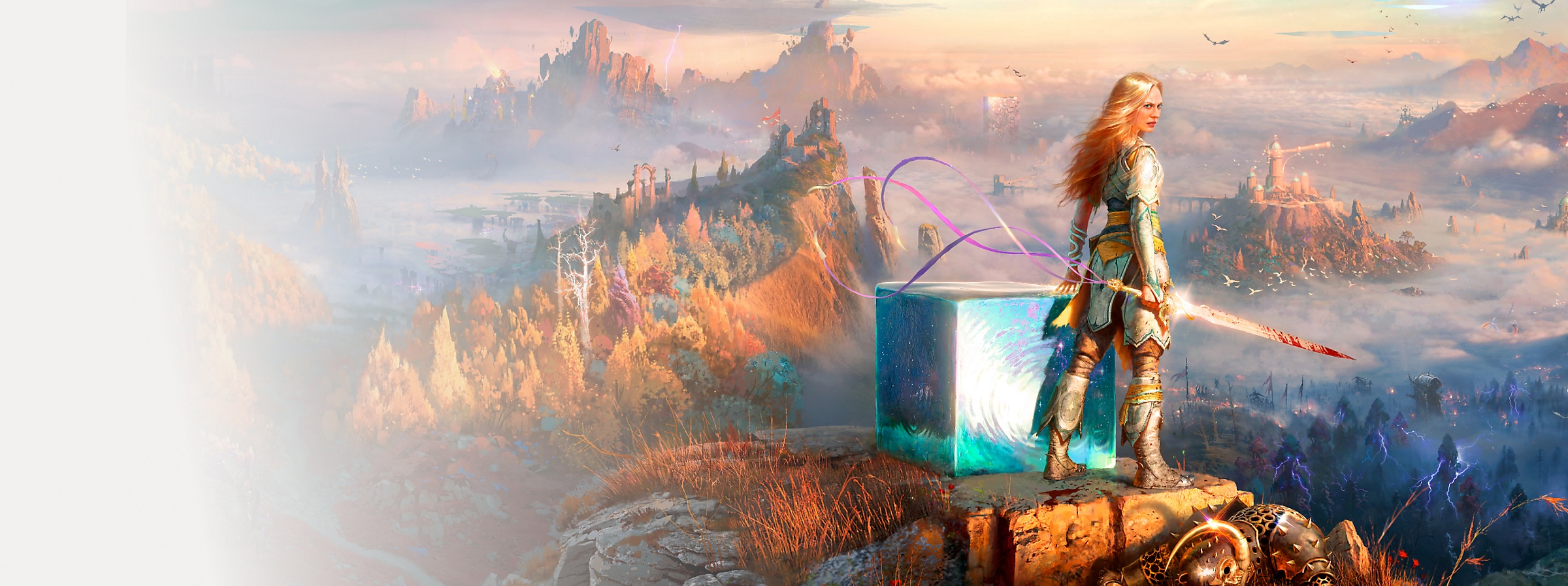
The Everywhen is the core setting introduced in God of War Laufey — described officially as “the afterlife of the gods of all mythologies.” It is not a single realm or region. It reads more like a mythic overlap zone where every pantheon's dead gods end up, trapped together in a space that amplifies magic, distorts time, and forces characters who never should have met into the same arena.
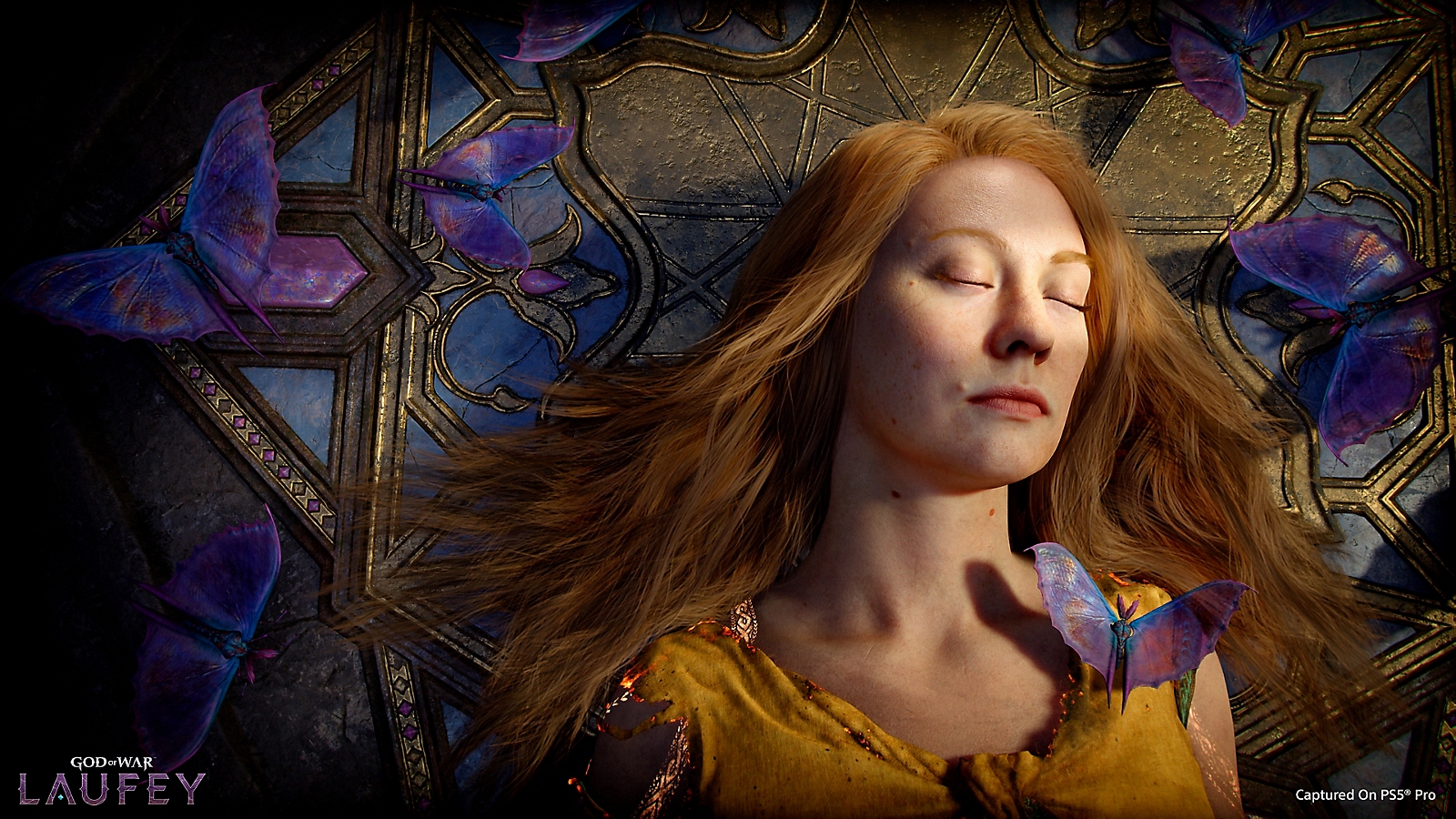
For Faye, the Everywhen is where she awakens after her death — after the funeral that opens God of War (2018). Her story here runs parallel to Kratos and Atreus' journey through the Nine Realms, which means the Everywhen is not a sequel setting. It is a concurrent one.
Magic Amplified a Thousandfold
Cory Barlog gave the Everywhen its most important mechanical detail in the IGN exclusive interview:
“In the realms that we've explored, the Greek and the Norse realms, magic is part of the air. It's all around us. It's in different density in those areas. When we get to the Everywhen, it's amplified a thousandfold.”
This is not just flavor text. A thousandfold magic density explains why Faye's latent abilities — her soul manipulation, her Guardian powers — become visible combat mechanics in the Everywhen when they were invisible or dormant during her life. It also explains why gods in this setting are more dangerous than they appeared in their original realms. Every ability, every divine trait, every mythic power is running at orders of magnitude above normal.
A Prison of Billionaires
Barlog was blunt about what happens when you put every myth's dead deities in one place. In an interview with IGN at Summer Game Fest, he used a striking metaphor:
“They're all assholes. Literally all the gods that exist across all mythologies, they have this terrible relationship with power, and how they abuse all of it. When you put all these people together — like a bunch of billionaires on an island — they think they're going to have a great life. No, they're all going to murder each other, and they're all going to be in this weird sense of conflict because they're trapped in a prison.”
That framing matters for understanding the Everywhen's social structure. This is not a peaceful afterlife or a neutral gathering ground. It is a prison— a pressure cooker where every god brings their ego, their grudges, and their hunger for dominance, and none of them can leave. The “billionaires on an island” comparison is precise: these are beings of immense power who believe their status entitles them to comfort, but instead find themselves trapped in escalating conflict with equals.
Crucially, Barlog also revealed that not all of the gods arrived here willingly:
“They didn't all die willingly.”
That single line reframes the Everywhen entirely. It is not just an afterlife for proud warriors who chose their end — it holds gods who were killed, gods who weresent here against their will, and gods who may have been trapped by forces beyond their understanding. The result is a setting defined by factional conflict, uneasy alliances, simmering resentment, and constant power struggles among beings who never chose to be roommates.
Converging Mythologies
- Norse — Still the emotional backbone, even when the geography gets stranger. Faye's personal history is Norse, and the Norse saga's ending is what shapes the Everywhen's existence.
- Egyptian — The myth branch fans have been waiting years to see made tangible. Sekhmet's presence gives it a named, concrete anchor.
- Mongol — The curveball influence that tells you this setting may be broader than anyone expected. Begtse's appearance confirms it is not just the big three pantheons.
The Everywhen's scope implies that everymythology is represented, not just the three named so far. Barlog's “all the gods that exist across all mythologies” phrasing is the clearest signal yet that the God of War universe is no longer limited to one or two pantheons.
Sekhmet — Egyptian Goddess of War
Sekhmet is the most detailed named god in the Everywhen so far. According to the IGN interview, she is tied to plague, vengeance, healing, and the sun— a composite portfolio that makes her one of Egyptian mythology's most dangerous figures.
In Egyptian lore, Sekhmet was created by Ra to punish humanity for its disobedience. She nearly wiped out the human race before being tricked into drinking beer dyed red to look like blood, which calmed her rage. That myth gives the character a built-in arc: overwhelming destructive power barely held in check.
Ariel Lawrence described her presence in the Everywhen as carrying “that gravitas, that menace, that commanding presence” — framing her as a figure who can stand as an even match for Faye rather than a simple boss encounter.
Begtse — Mongolian God of War
Begtse is the Mongolian counterpart and the confirmation that God of War is willing to reach beyond the usual Greco-Norse-Egyptian triangle. His name comes from the Mongolian word for “armor”, which fits the visual impression from the reveal.
In the Everywhen, Begtse serves as Sekhmet's “afterlife bodyguard”— a role that establishes a factional relationship between the two. They are not random encounters. They are paired. That pairing suggests the Everywhen's power structure involves alliances and hierarchies, not just isolated boss fights.
Lawrence described wanting to “showcase that feeling of an even match” between Sekhmet and Begtse, which may hint that their dynamic — protector and protected, or something more complicated — will play a role in the story.
Cross-Time Perception
One of the Everywhen's most intriguing properties: Faye can hear Kratos' voice and see his apparitions while she is there. Since her story runs parallel to GoW 2018 and Ragnarök, she has just been separated from her husband and son. The Everywhen appears to blur the boundary between life and death enough that Faye can perceive what is happening on the other side.
Whether this is a two-way connection — whether Kratos can sense Faye during Ragnarök — remains unconfirmed. But it opens a narrative door that the series has never walked through: the possibility that Faye and Kratos are aware of each other across the divide.
Why the Everywhen Matters More Now
Between the thousandfold magic density, the “prison of assholes” social structure, Sekhmet and Begtse's detailed backstories, Rue's guardian role, and Faye's cross-time perception, the Everywhen has shifted from vague backdrop to the most mechanically and narratively dense setting the series has ever introduced.
It is the system that reshapes how this game handles allies, enemies, weapons, magic rules, and the relationship between life and death — all at once.
Everything Connects — Barlog's Grand Design
Cory Barlog has been increasingly explicit about the interconnected nature of the entire God of War universe. In a recent statement, he framed the ambition plainly:
“It all connects to each other. It all influences each other.”
That line is not just about Laufey. It is about the Greek era, the Norse era, and wherever the series goes next — all feeding into and reflecting off each other. The Everywhen is the narrative mechanism that makes that ambition concrete: a space where every mythology overlaps, where dead gods from every pantheon coexist, and where Faye can perceive Kratos across the boundary between life and death.
If the Everywhen is the “where,” Faye's cross-time perception is the “how,” and Barlog's statement is the “why.” The series is no longer telling isolated mythological chapters — it is building toward a unified mythological architecture.
Open Mysteries & Unanswered Questions
- The Horn Blower — One of the biggest unresolved mysteries from GoW 2018 (who blew the horn to summon Jörmungandr?) may connect to Laufey. Ariel Lawrence hinted that “I don't think people understand how stubborn Cory Barlog can be” when asked about the answer — suggesting it may not be resolved in this game. A prominent fan theory now suggests Faye herself blew the horn from within the Everywhen (Polygon, The Gamer).
- The Everywhen's full scope — Officially confirmed pantheons include Norse, Egyptian, and Mongolian. But Barlog's “all the gods across all mythologies” language leaves the door open for any tradition to appear.
- Two-way perception — Faye can sense Kratos. Whether Kratos can sense Faye during Ragnarök remains unknown.
- Gods Kratos killed — Ariel Lawrence, when asked whether gods that Kratos killed in the Greek era could appear in the Everywhen, responded “absolutely” and described it as “definitely the kind of long-term potential for a franchise that has killed as many gods as we have.” This suggests the Everywhen may serve as a reunion ground for figures from Kratos' violent past.
- Non-voluntary deaths — Barlog confirmed the gods “didn't all die willingly,” raising questions about how gods arrive in the Everywhen and whether death is the only path in.